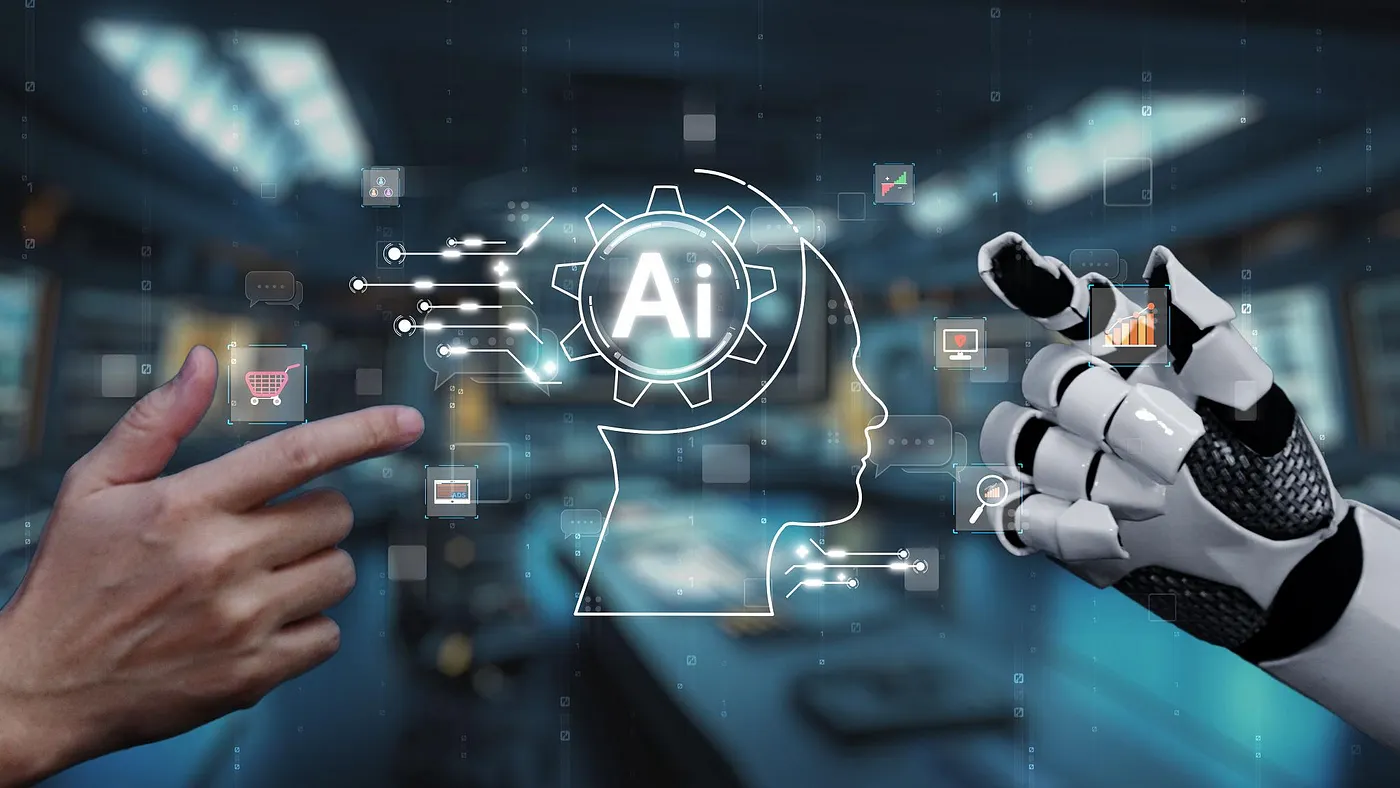
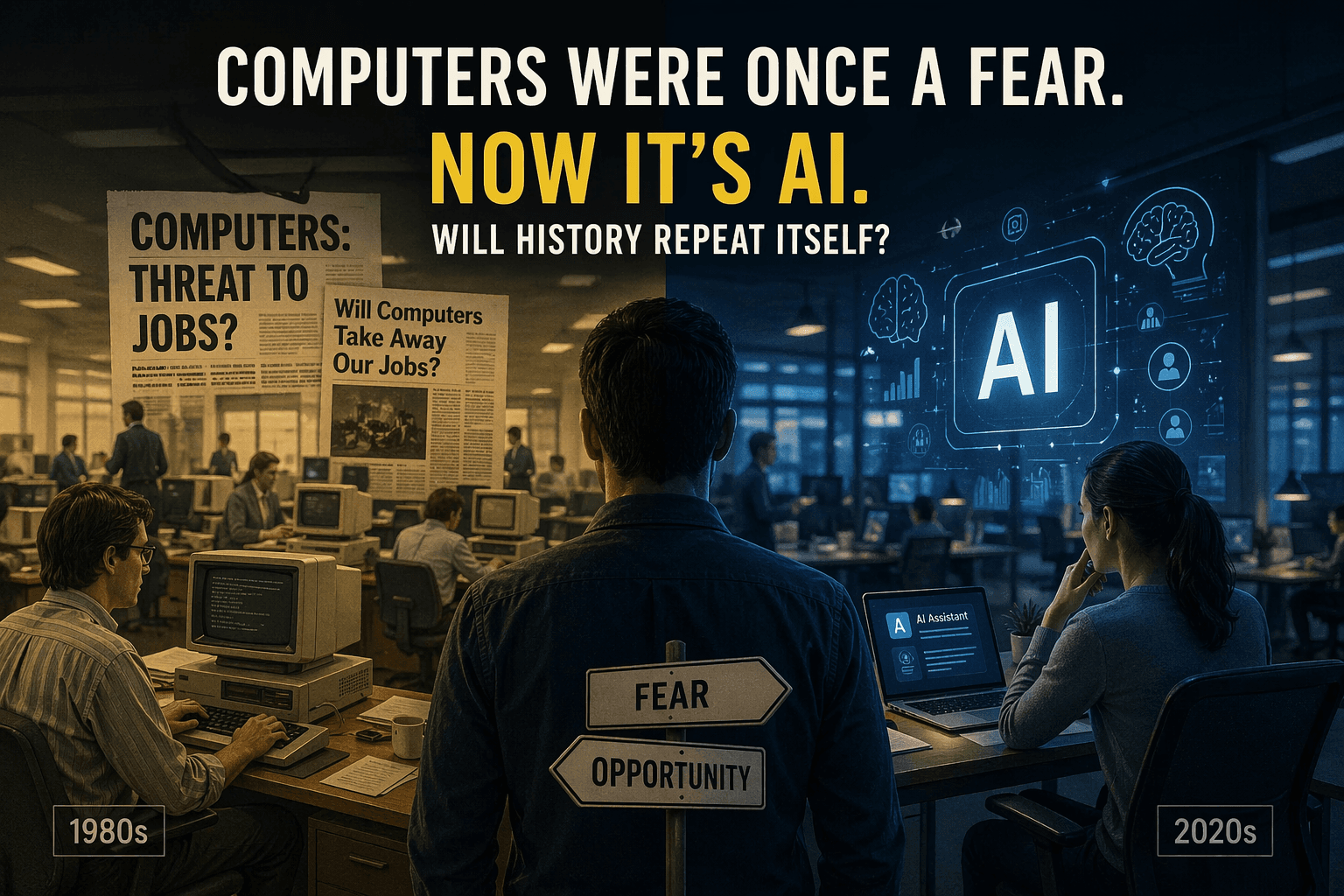
Companies Think AI Will Replace Designers. They’re Missing One Big Truth.
Why AI can generate screens, but still can’t replace UI/UX design thinking, human expertise, and user understanding.
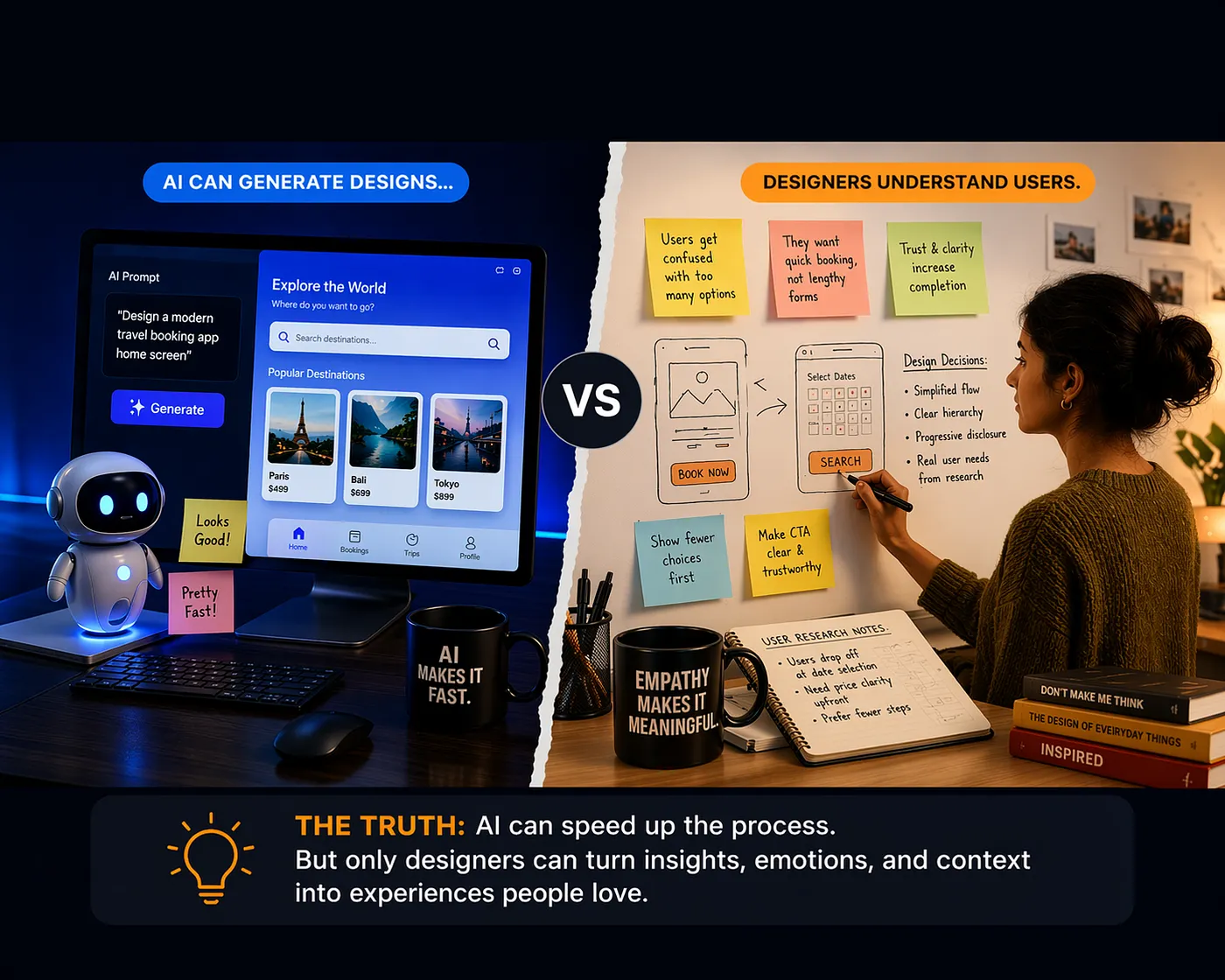
Companies Think AI Will Replace Designers. They’re Missing One Big Truth.
Why AI can generate screens, but still can’t replace UI/UX design thinking, human expertise, and user understanding.
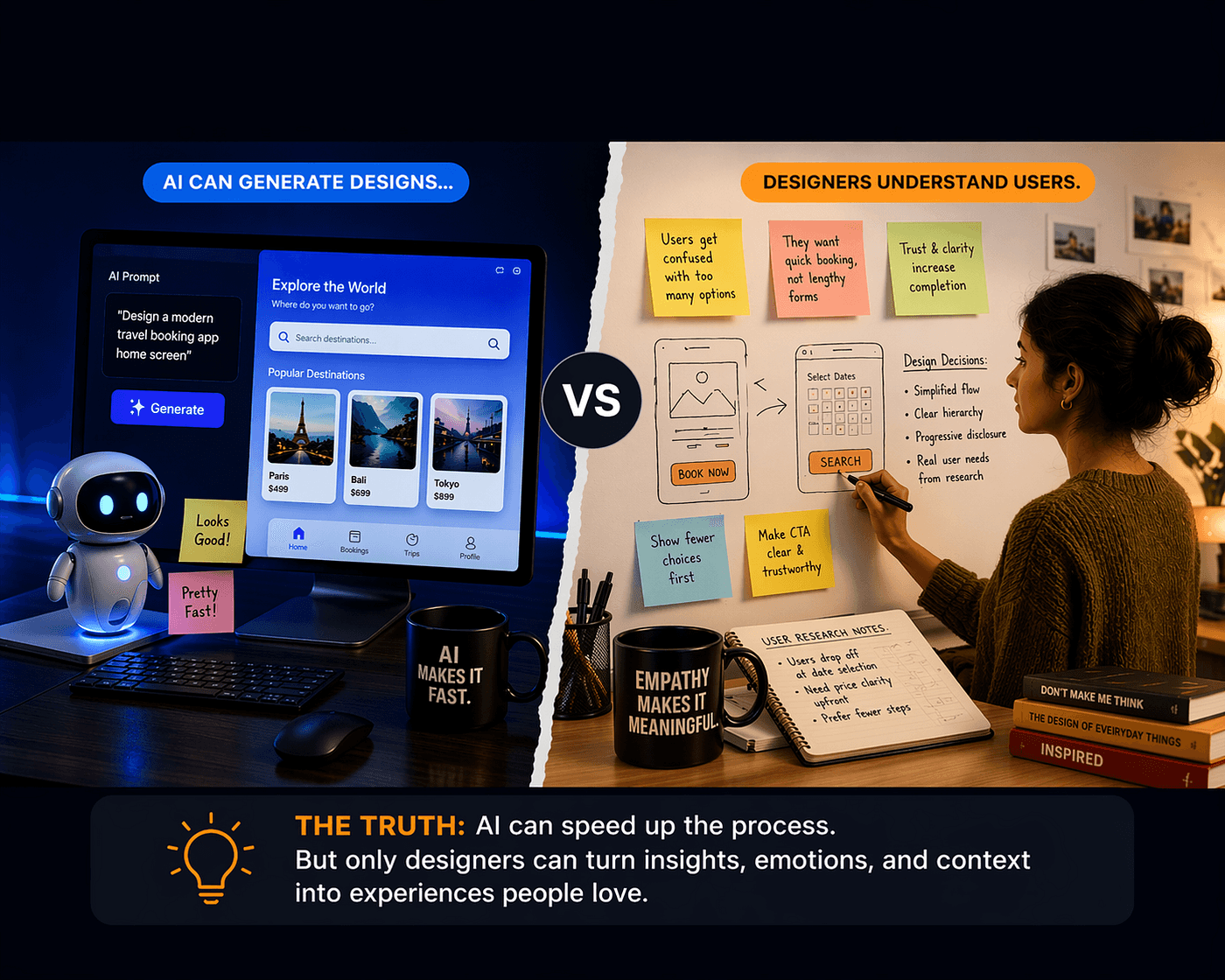
Many companies seem to be asking the same question:
If AI can create designs in seconds, do we still need designers?
With tools like OpenAI ChatGPT, Anthropic Claude, and many AI design tools becoming more powerful, it’s easy to see why this question is growing.
A few prompts can generate landing pages, dashboards, mobile screens, logos, and polished UI concepts. From the outside, it can look like design has become automated. But one truth remains- Design Is Not the Screen. It Is the Thinking Behind It.
AI is strong at producing outputs. It can generate layouts quickly, It can create multiple variations, It can suggest styles, It can speed up execution.
But visuals are only one part of product design. Real UI/UX design requires understanding:
What users are trying to achieve
Where they feel confused
What creates friction
What builds trust
Why users leave or continue
What makes tasks easier
These answers do not come from prompts alone. They come from research, testing, observation, business context, and experience.
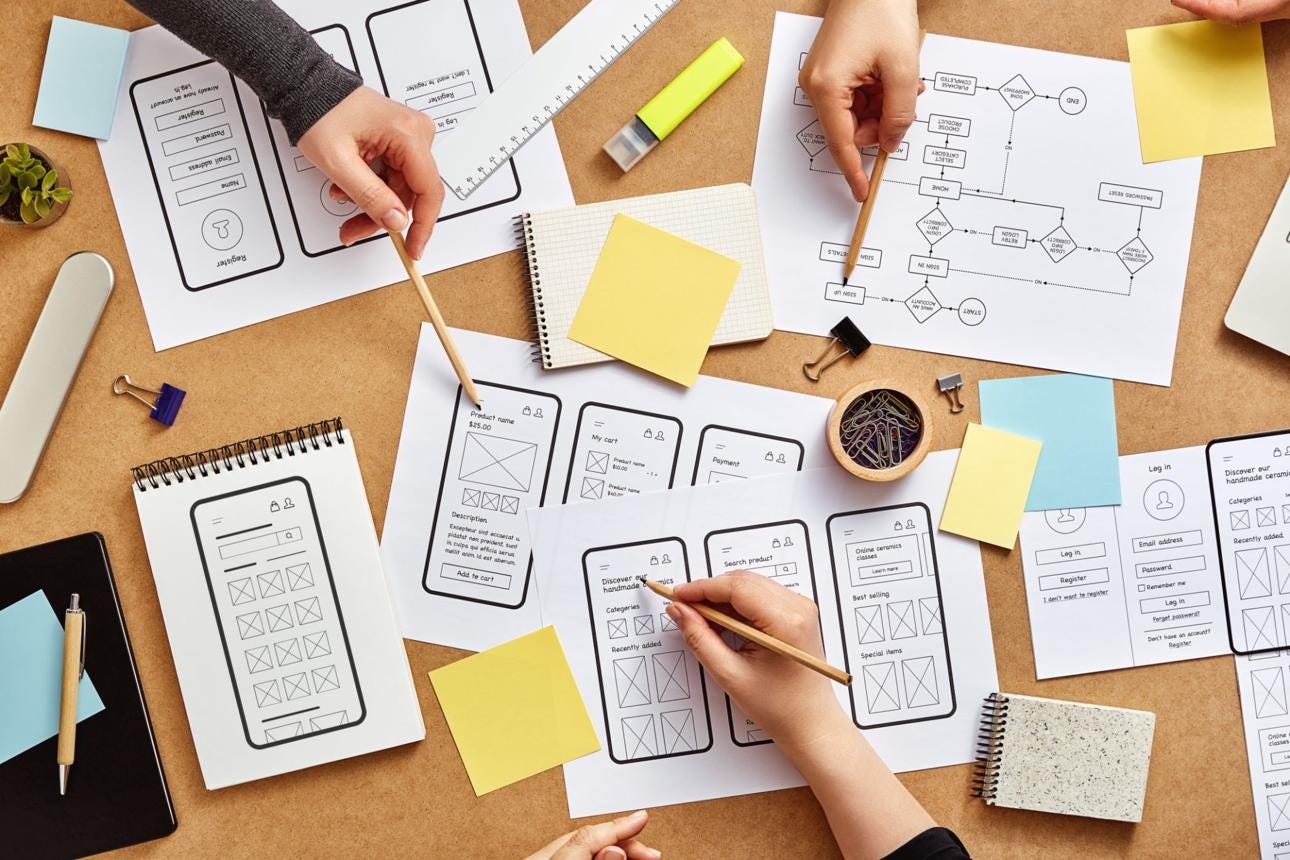
Anyone Can Prompt a Screen. Not Everyone Can Solve a Problem.
Today, almost anyone can ask AI:
Create a modern banking app.
Design a clean dashboard.
Make a premium e-commerce homepage.
And yes, AI may generate something visually impressive. But attractive screens do not always create successful products.
A polished interface can still fail when:
Navigation is unclear
Important actions are hard to find
The flow feels frustrating
Accessibility is ignored
Users do not trust the product
The wrong problem is being solved
This is where designers add value. They do not only ask: What should it look like?
They ask:
What problem are we solving?
Is this intuitive?
Will users succeed quickly?
Does this support business goals?
AI Doesn’t Fully Understand Human Behavior
Users rarely explain pain points clearly. They hesitate, They abandon forms, They compare too long, They feel overloaded, They lose confidence and leave.
A skilled UI/UX Designer notices these patterns and improves the experience. AI can analyze signals, but interpreting hesitation, trust, emotion, and real-world context still requires human judgment. That is where strong UX decisions come from.

Designers Make Evidence-Based Decisions
Strong design decisions are rarely based on opinion alone.
They are based on:
User research findings
Usability testing observations
Behavioral analytics
Accessibility reviews
Business constraints
Prioritization trade-offs
UI/UX Designers use this evidence to improve flows, reduce friction, and increase success rates. AI can support analysis and generate ideas, but it cannot independently validate usability or own accountable product decisions the way experienced professionals can.
Human Expertise Drives Better Business Decisions
AI can recommend options based on patterns. But growth often depends on decisions shaped by experience.
A UI/UX Designer or product expert understands:
Customer expectations
Market realities
Brand perception
Business priorities
Risks behind poor experiences
AI may suggest a direction, Experienced professionals ask deeper questions:
Will this increase trust?
Will customers actually use it?
Does this fit our long-term strategy?
Are we improving outcomes or just visuals?
What happens if this fails?
Those choices often decide whether a product succeeds or struggles. AI can assist decisions. Human expertise leads them.

Cost Cutting Can Become Quality Cutting
Some companies see AI mainly as a way to reduce costs. That may help in the short term. But removing thoughtful design talent can create larger long-term costs:
Lower conversion
More support issues
Poor adoption
Higher churn
Inconsistent experiences
Accessibility gaps
Expensive redesigns later
Saving money upfront while damaging quality is rarely a smart trade-off.
AI Should Empower Designers, Not Replace Them
The smartest companies will not ask: How do we replace designers with AI?
They will ask: How do we help designers work faster and smarter with AI?
That is where the real value is. AI can help with:
Faster concept generation
Exploring multiple directions
Drafting microcopy
Summarizing research notes
Reducing repetitive tasks
Rapid prototyping
This allows designers to focus on:
Strategy
Innovation
User needs
Experience quality
Better decisions
Final Thought
AI is powerful and will continue changing how products are built. But speed is not wisdom, Output is not judgment, Screens are not experiences. Companies that understand this will build stronger products. Those that don’t may move faster — toward weaker outcomes.
AI can generate interfaces.
UI/UX Designers create experiences.

Deepa Rote
Product Designer | UX Strategy Enterprise | AI Experiences
If you like what you see or have any questions, feel free to send me an email anytime.
Share this article
Recent articels
I write about the future of design and the life of a product designer